
How to Get Pregnant With PMOS, Formerly PCOS
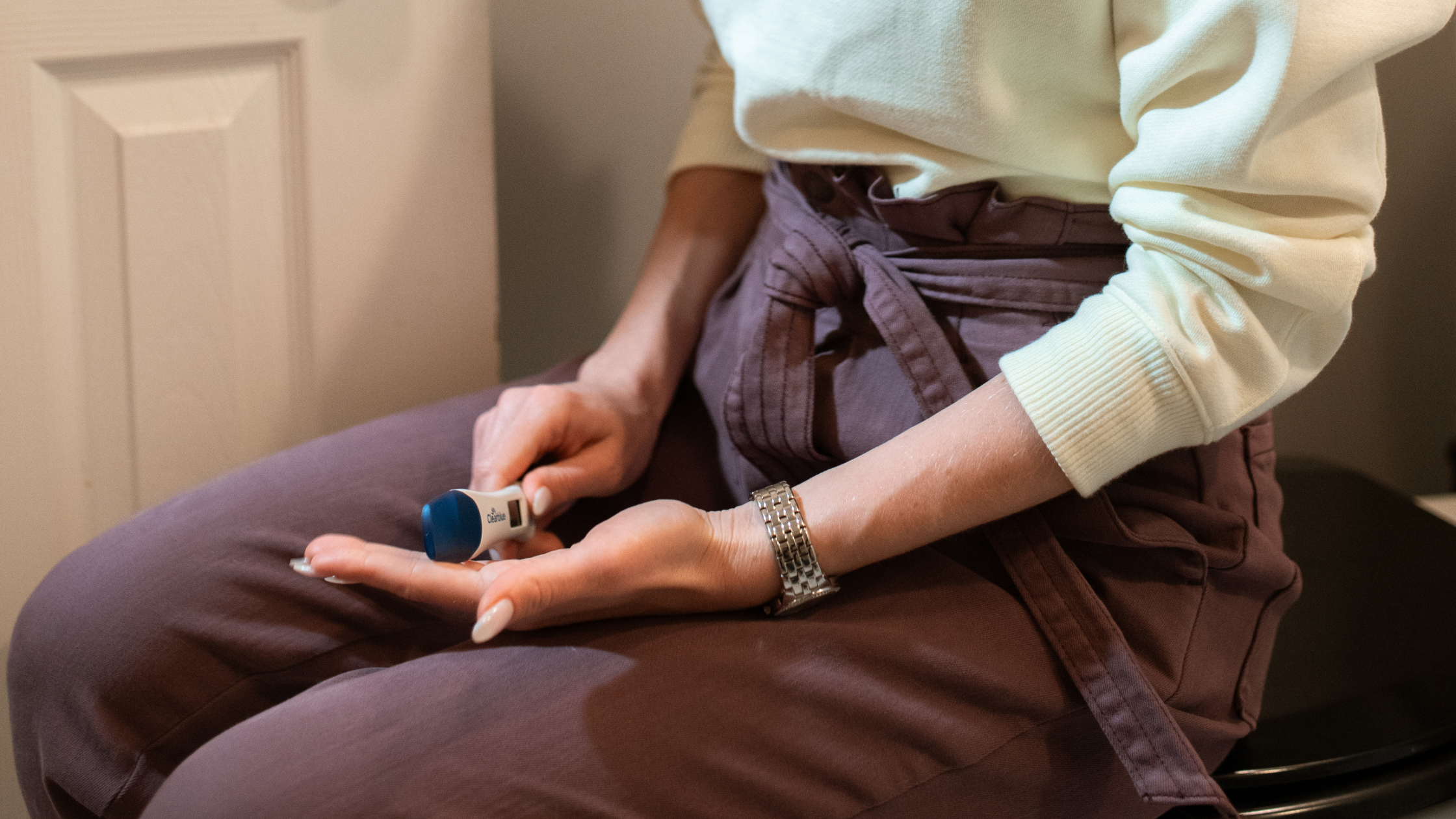
PMOS stands for Polyendocrine Metabolic Ovarian Syndrome and is the updated terminology for what many patients may still know as PCOS, or Polycystic Ovary Syndrome.
In this article, we use PMOS when referring to the full endocrine and metabolic condition formerly known as PCOS. We also use polycystic ovaries when referring specifically to the ultrasound finding, which is not always the same as having the full syndrome.
If you have questions about your symptoms, cycle, fertility, or diagnosis, please speak with a qualified women’s health specialist.
If you have PMOS and you’re trying to get pregnant, it can be hard to know where to start.
Maybe your periods are unpredictable.
Maybe you’re using an app or ovulation tests, but still can’t tell when your fertile window is.
Maybe you’ve been trying for months and keep hearing, “just give it more time,” even though something doesn’t feel right.
PMOS, formerly known as PCOS, can make it harder to get pregnant when it affects ovulation. But it’s important to know that having PMOS doesn’t mean you can’t conceive.
It also doesn’t mean PMOS is automatically the only reason pregnancy hasn’t happened yet.
The goal isn’t to assume. It’s to understand what’s happening in your body, identify anything that may be getting in the way, and create a plan that fits you.
How can PMOS affect your ability to get pregnant?
aPMOS is a hormone-related and metabolic condition that can affect your periods, ovulation, and fertility.
Ovulation happens when one of your ovaries releases an egg. If you’re not ovulating regularly, you may have fewer opportunities to become pregnant.
That can also make it harder to know when you should try to conceive.
Some women with PMOS have long cycles. Others miss periods for months at a time. Some still experience bleeding but aren’t consistently releasing an egg.
That’s part of what makes PMOS so confusing.
You may have a period without knowing whether ovulation happened. You may also ovulate occasionally, but not on the predictable schedule that most fertility apps assume.
If you’re trying to understand how PMOS, irregular periods, and fertility may be connected, our article on what your symptoms might be telling you is a helpful place to start.
Can you get pregnant naturally with PMOS?
Yes, many women with PMOS can get pregnant naturally.
Some women with the condition ovulate regularly enough to conceive without treatment. Others may begin ovulating more consistently after an underlying hormonal or metabolic concern is addressed.
Some will need additional support.
There isn’t one answer that applies to every patient because PMOS doesn’t affect everyone in exactly the same way.
Your chances of becoming pregnant may depend on:
How often you’re ovulating
Your age
Your egg supply
The health of your uterus
Whether your fallopian tubes are open
Your partner’s reproductive health
Whether another condition is also affecting fertility
That’s why the better question isn’t simply, “Can I get pregnant with PMOS?”
It’s, “What’s making it harder for me to get pregnant, and what can we do about it?”
Start by finding out whether you’re ovulating
If your cycles are irregular, you may not know whether or when ovulation is happening.
Period-tracking apps can be useful, but they usually estimate your fertile window based on past cycle dates. When your cycles change from month to month, those estimates may not match what your body is actually doing.
Home ovulation tests can also provide helpful information. However, the hormonal patterns associated with PMOS can sometimes make the results difficult to understand.
You shouldn’t have to rely on guesswork.
A fertility evaluation may include a conversation about your cycle history, bloodwork, hormone testing, ultrasound imaging, or other ways of determining whether you’re ovulating.
The purpose isn’t just to label you with PMOS.
It’s to find out whether irregular ovulation is actually the main reason you’re having trouble getting pregnant.
Make sure PMOS is the right diagnosis
It’s also important to understand the difference between PMOS and polycystic ovaries.
Polycystic ovaries describe something that may be seen on an ultrasound. PMOS refers to the full hormone-related and metabolic condition.
They’re connected, but they aren’t automatically the same thing.
You may have ovaries that appear polycystic without having the complete syndrome. You may also have PMOS symptoms even if an ultrasound doesn’t tell the whole story.
Our article on the difference between polycystic ovaries and PMOS explains why that distinction matters.
An accurate diagnosis helps your care team understand what should be treated rather than grouping every patient with irregular periods or an unusual ultrasound finding into the same category.
PMOS may not be the only fertility factor
PMOS may explain irregular ovulation, but fertility can be affected by more than one thing.
A complete evaluation may also look at:
Whether your fallopian tubes are open
The shape and condition of your uterus
Your ovarian reserve
Thyroid or other hormone concerns
Semen quality and other male fertility factors
A history of miscarriage or pregnancy loss
Symptoms of endometriosis or another pelvic condition
This matters because a treatment designed to support ovulation won’t correct a blocked fallopian tube, uterine abnormality, male fertility factor, or another condition affecting conception.
At The Kaldas Center, our approach to fertility care begins with finding the reason behind the problem.
As Dr. Kaldas has explained, fertility treatment shouldn’t be one-size-fits-all. A targeted evaluation should come before targeted treatment.
You can learn more about why understanding the cause of infertility matters.
Don’t ignore painful periods or pelvic pain
PMOS may affect your periods, but it isn’t usually considered the main cause of severe pelvic pain.
If your periods are extremely painful, your cramps interrupt your normal life, or you experience pain during sex, bowel movements, or other times of the month, something else may also be going on.
Endometriosis can affect fertility and may occur alongside PMOS.
Because both conditions can be connected to difficulty getting pregnant, one diagnosis can sometimes distract from the other.
You may be told that all of your symptoms are caused by PMOS when your pain deserves a closer look.
Our article on endometriosis and infertility explains more about how endometriosis may affect conception.
You don’t need to decide which condition you have before asking for help. Your provider should listen to the complete picture.
What might PMOS fertility treatment look like?
Treatment depends on what your evaluation reveals.
If you aren’t ovulating consistently and no other fertility factors are found, your provider may discuss medication that helps support ovulation.
Medications such as letrozole or Clomid may be considered in certain situations. Metformin may also be used for some patients when insulin resistance or another metabolic concern is part of the picture.
But no medication is right for everyone.
Clomid, for example, affects ovulation. If you’re already ovulating and something else is preventing pregnancy, taking Clomid may not address the actual problem.
Dr. Kaldas explains why it’s important to understand your diagnosis in what you should know before trying Clomid.
Other treatment options may involve addressing a thyroid condition, treating endometriosis, correcting a uterine concern, supporting metabolic health, or working with an assisted reproductive specialist when needed.
The right next step depends on why you’re struggling to conceive in the first place.
What can you do while trying to conceive?
There isn’t one perfect diet, supplement, or routine that guarantees pregnancy with PMOS.
Still, supporting your health before pregnancy can help you and your provider prepare for the safest path forward.
You may want to talk with your healthcare provider about:
Taking a prenatal vitamin with folic acid
Reviewing your medications and supplements
Checking your blood pressure and blood sugar
Managing thyroid, diabetes, or other health conditions
Building realistic nutrition and movement habits
Supporting your sleep and emotional health
Avoiding smoking and alcohol
PMOS affects women of every size.
While healthy habits may support your hormone, metabolic, and reproductive health, your care shouldn’t be reduced to being told to “just lose weight.”
You deserve a plan that considers your symptoms, medical history, fertility goals, and overall health without shame or judgment.
When should you ask for fertility help?
Many patients are told to try for one year before asking for help if they’re younger than 35, or six months if they’re 35 or older.
But you may not need to wait that long if you already have symptoms or a condition that may affect fertility.
You may want to speak with a specialist sooner if:
Your periods are very irregular
You regularly skip periods
You’ve been diagnosed with PMOS, formerly PCOS
You aren’t sure whether you’re ovulating
You’re 35 or older
You have painful periods or ongoing pelvic pain
You’ve experienced recurrent pregnancy loss
You or your partner has a known fertility concern
You’ve been trying without answers and feel that something isn’t right
Asking for an evaluation doesn’t commit you to medication, surgery, IUI, or IVF.
It simply gives you more information.
When you understand what’s happening, you can make clearer decisions about what to do next.
Listen to what your body is telling you
Trying to get pregnant with PMOS can feel frustrating, especially when your cycle is unpredictable, and the advice you receive doesn’t seem to fit your experience.
But you don’t have to keep guessing.
You know when your body feels different. You know when your periods don’t seem normal. And you know when “just keep trying” no longer feels like a complete answer.
A thoughtful fertility evaluation can help determine whether you’re ovulating, identify other concerns that may be affecting conception, and create a plan based on your specific needs.
At The Kaldas Center, we’ll take the time to listen, ask the right questions, and help you understand your next step.
Medical Disclaimer
This article is for educational purposes only and isn’t a substitute for medical advice, diagnosis, or treatment. If you have questions about your cycle, symptoms, fertility, or treatment options, please speak with a qualified healthcare provider.
Sources
The Kaldas Center. “PMOS, Irregular Periods, and Fertility: What Your Symptoms May Be Telling You.”
The Kaldas Center. “Fertility Specialists.”
The Kaldas Center. “The Difference Between PCO and PCOS.”
The Kaldas Center. “Overcoming Infertility: The Importance of Understanding Why.”
The Kaldas Center. “Overcoming Infertility: What You Should Know Before Trying Clomid.”
The Kaldas Center. “Endometriosis and Infertility: What You Should Know.”
American College of Obstetricians and Gynecologists. “Polycystic Ovary Syndrome.”
American Society for Reproductive Medicine. “Recommendations From the 2023 International Evidence-Based Guideline for the Assessment and Management of Polycystic Ovary Syndrome.”